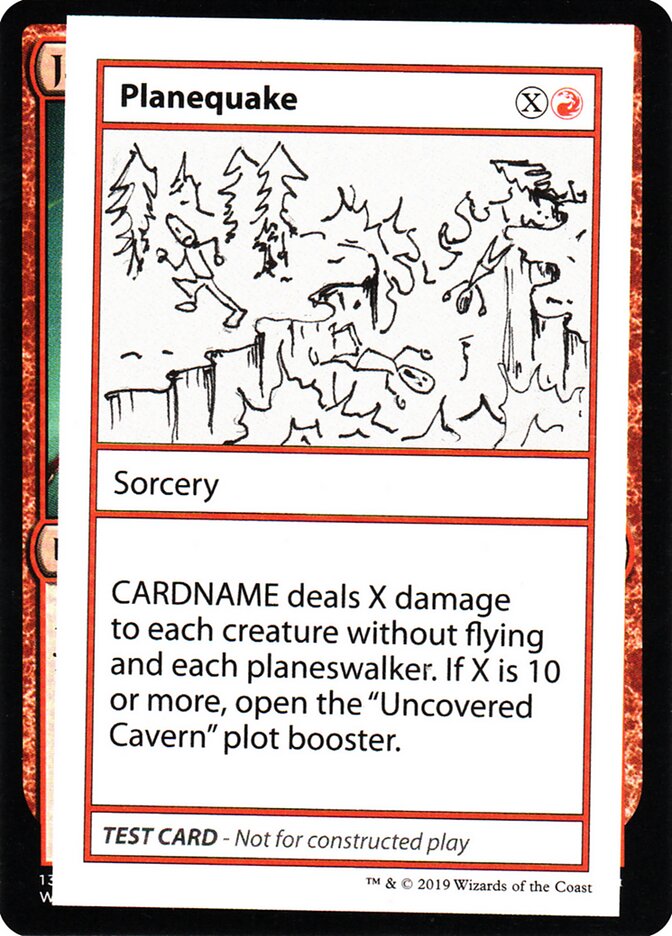
It’s #MTGMoxtober! A month of design prompts for the Magic creatively inclined. Today is October Sixth, which means the prompt for today is Plot
For a long time, Steamflogger Boss was the go to example of a White Whale of Magic design. A bit of trinket text that was alluring because it was so impossible. But Joke Problems require Joke Solutions, and Unstable provided a way to solve the issue while avoiding any rules unpleasantness. While this was an elegant solution, it had the unfortunate side effect of resolving the most tantalizing design hooks that WotC had provided casual designers. So it was quite nice of them to include a new one when they released Mystery Boosters
Now, plot boosters still need to answer the same questions that Ari posed about Contraptions:
- Does it create fun gameplay?
- Does it work within the rules?
- Is it comprehensible and intuitive?
- Does it have sufficient design space, especially at common?
- Does it mesh well with the other themes of the set?
- Does it have resonance with the world's flavor?
- Does it appeal to many different kinds of players?
- Can it be templated with a sufficiently small word count?
- Is it novel?
Fortunately, the Mechanics at the disposal of both WotC and casual designers look a lot different than they did back in 2013. Plot boosters don’t need to show up in a standard legal, black bordered set. They can be their own product, they could be in Universes Beyond, they could be digital. Even if they were to show up in a standard legal set, they could involve sideboards or external components to an extent that that sets 10 years ago weren’t really trying. The wording of the card is most reminiscent of opening story packs in games like Risk Legacy or Gloomhaven. Trying to figure out how to make a card like Planequake work in a game mode like that is too ambitious for me right now, so instead my take will focus on a Jumpstart like setting where a player might have a deck with Planequake and an included Uncovered Cavern plot booster included.
My mechanic would work like this:
When you open a Plot Booster, remove the first card and shuffle the rest face down. Perform the actions of the first card, then uncover the next card and perform its ability. Then you may either empty your mana pool and retreat, or uncover the next card and activate its ability. You may only activate plot abilities and mana abilities during the resolution of the plot.
This steals a tried and true push your luck mechanic from games like Incan Gold or Mark Rosewater’s own game of scantily clad miners Gold Digger. Here’s what I’m picturing for the first card of Uncovered Canyon
From there, exploration of the pack is random. That means that while you could use a sealed pack for the mechanic, you could also replay it using those cards because the order would be different. For this implementation, the packs would be the start card, 4 commons, two uncommons and a rare. A common could look like:
The common effects would provide effects for off color costs or 2 generic. The design of Planequake ensures that you’re probably not entering the cavern with a bunch of extra mana, so these plot cards can force hard choices about where to spend the initial mana you get from the first card
Uncommons might look like this:
Higher risk!
A rare could be:
Big impact, high price, high cost of failure. If this is the first card you flip, it’s a big upside, but if not, you’ll need to withhold a lot of potential payouts to dig deep to find it.
This doesn’t seem like an implementation that would work easily in a standard legal set, but in a dedicated supplemental like Jumpstart that could include a sealed pack of these it seems like a lot of fun!
So that’s my pitch for Plot Boosters. What are your thoughts? Will we see an actual implementation of Plot Boosters? What other themes could be interesting for Plots or cards that launch them? Let me know!
You can find me on Twitter @wobbles
or in the Beacon of Creation discord https://t.co/WXoiKIC1qf?amp=1